
·7 min read
Building a Muslim brand without being preachy
A Muslim brand shows its faith through conduct: honest prices, clear refusals, fair treatment. Here is how to do that without decorating or preaching.
You build a Muslim brand without being preachy by letting your faith show in how the business behaves, not in how much religious language and imagery sits on top of it. Honest prices, clear limits on what you will sell and say, and fair treatment when something goes wrong are things every customer can see and test. Religious words and symbols are not the problem. They become preachy when they are used as a badge, instead of being the reason behind your decisions.
Below: what the "performatively Islamic" trap looks like, where faith actually shows in a business, when Islamic visuals belong, and a worked example.
What makes a brand feel preachy?
A brand feels preachy when faith is used to sell rather than to decide. The customer senses that the religion is there to win their trust, not to shape how they are treated.
Some common forms:
- Verses as filler. An ayah on every social post, with no link to the product or the day.
- Badges where nothing is in question. A large "100% halal" stamp on a product that could never have been anything else, used as a trust shortcut.
- Religious seasons as sales costumes. A Ramadan campaign that is a discount push with lanterns drawn around it.
- Lecturing the customer. Captions that tell buyers how they should practise, from a business that wants their money.
- Claims about your own piety. "The most honest shop in town" or "a blessed brand", said by the brand about itself.
We call this being performatively Islamic. It is worth naming because it happens to sincere founders, not only cynical ones. Our own internal guideline warns that if SiF8 ever becomes loud, flashy or performatively "Islamic", it has lost its character, whatever the numbers say. We hold the studio to the same test we use on clients.
Why does decoration backfire?
Decoration raises the standard you are judged by, and then gives the customer nothing to check it against.
Here's the trade-off. When faith is the first thing a customer sees, every later experience is measured against it.
A late delivery is annoying from any shop. A late delivery from a shop that quotes hadith in its captions, with no apology and no update, feels like hypocrisy. The religious framing didn't build trust. It borrowed some, and the conduct has to repay it.
There is a harder edge too. The boundaries we work within list image-washing among the things we refuse: using "halal branding" to cover for harm. This isn't an accusation against founders who lean on decoration. But the habit is related. It puts the label ahead of the substance.
Where does faith actually show in a business?
Faith shows where it costs you something: in your prices, your refusals and the way you treat people.
In your prices
A price should mean what it says. That means the full cost is visible before checkout, a "was" price is one you actually charged, and a smaller pack is not sold at the old price without saying so.
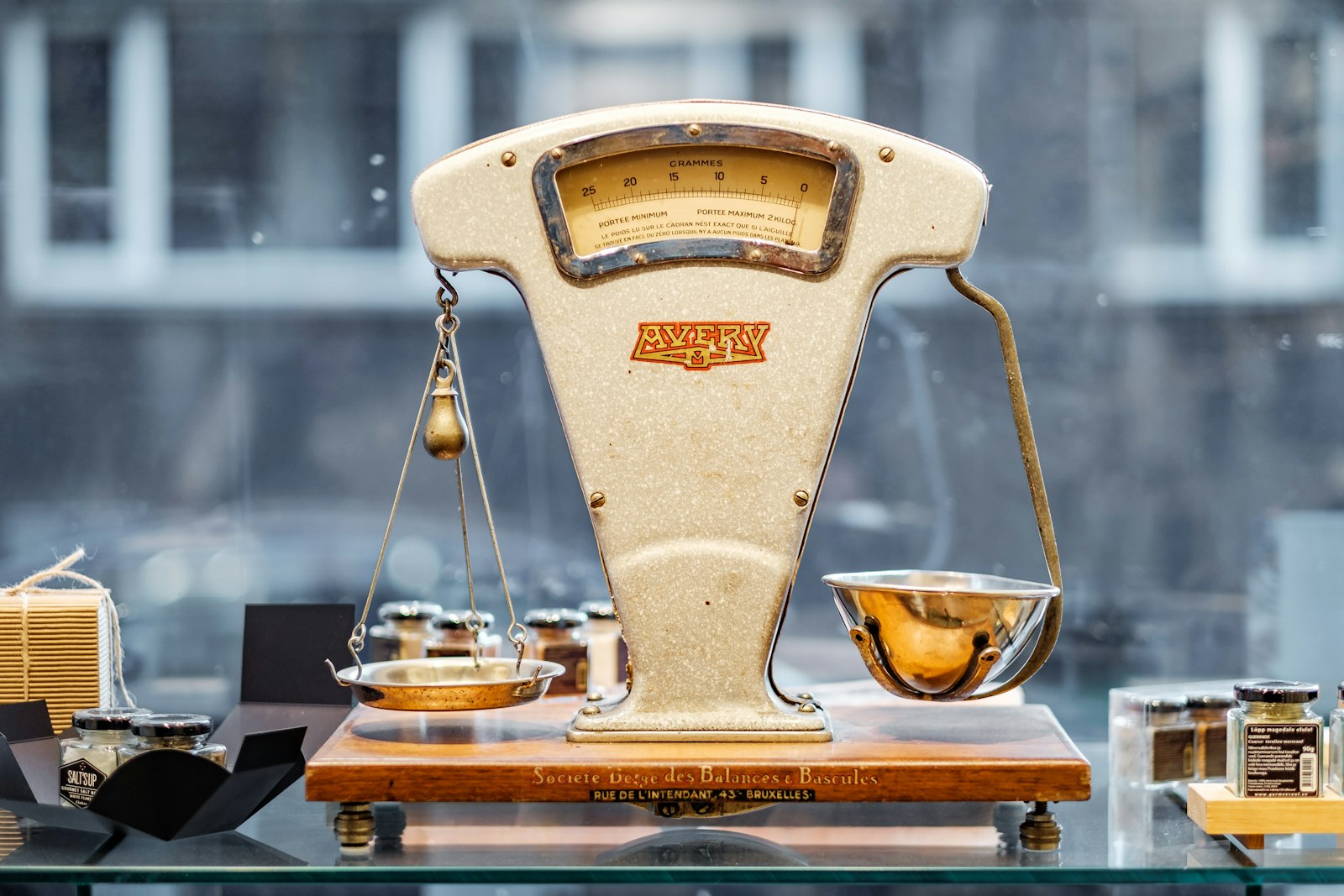
The Qur'an addresses this directly, in the language of the market: "Woe to those who give less [than due], Who, when they take a measure from people, take in full. But if they give by measure or by weight to them, they cause loss." (Qur'an 83:1-3, Sahih International)
The verses speak about measure and weight. For a seller today, the plain lesson is that what you give should match what you take. A hidden delivery fee or a quietly shrunken product is worth checking against that.
In your refusals
What you refuse to sell, say or build tells customers more about your values than anything you claim. We publish ours on our halal marketing page: no fake urgency, no inflated numbers, no dark patterns, no riba-based offers, no sexualised imagery.
You don't need a long manifesto. One plain line in the right place does the work. "We don't offer interest-based instalment plans" on a checkout page is a quieter and stronger signal than a verse in the footer. For a ruling on a specific product or contract, ask a qualified scholar. Your job as a brand is to say clearly what you avoid and keep to it.
In how you treat people
This is the part customers remember. How you handle a complaint, a damaged parcel, a refund you would rather not give, a delay you could hide.
Honesty here is mostly small, unglamorous decisions. Telling a customer the restock is three weeks away, not "soon". Replacing a broken item without making them argue. Not pressuring a hesitant buyer with a deadline that isn't real, which we wrote about in fake urgency and scarcity.
Can a Muslim brand still use Islamic words and visuals?
Yes, when they carry the meaning of the brand rather than decorate it. The question to ask of any religious element is whether you could explain why it is there in one honest sentence.
Aboron is a useful example from our own work. It is a Bangladeshi modestwear label, and the name means covering. Its mark joins Arabic calligraphy of the word for modesty (hayā), a floral canopy and a Bengali wordmark into one sheltering shape. The calligraphy is there because modesty is what the product is for.
The design reasoning also shows what we left out. Line-art silhouettes of a woman in hijab are a common shortcut in that category, and they make every label look alike. So the Aboron mark carries no figure at all. You can see the full reasoning in the Aboron case study.
Compare that with a crescent added to the logo of a business where nothing about the product connects to it. That asks the symbol to do work the business hasn't done.
A worked example
Here is a hypothetical. Say you run an online shop selling dates and spices, and Ramadan is your biggest season.
The preachy version: an ayah on every post for thirty days, a "Ramadan Mubarak, 40% off" banner that runs all month, a "100% halal" badge on the dates, and a caption reminding followers that a good Muslim breaks the fast with dates.
The conduct version looks like this:
- A real deadline, stated once. "Order by the 20th for delivery before Eid. After that, our couriers can't promise it."
- The full price up front. Delivery charges shown on the product page, not added at the last step.
- A plain returns line. "If a box arrives damaged, send a photo and we'll replace it."
- One sentence on the About page about why the business is run the way it is, with any Arabic term explained.
Nothing in the second version is hidden. It is simply quieter, and every part of it can be checked by the customer. A Muslim buyer will recognise the values. A non-Muslim buyer will just see a shop that keeps its word.
Questions founders ask
Should I mention my faith on my website at all?
You can. Say it once, plainly, where a customer looks for who you are, usually the About page. Explain how it changes the way you run the business, so the statement has something behind it.
Is it wrong to share Qur'an verses on a business account?
We don't give rulings, so ask a scholar you trust. Our own practice is to quote only when it serves the point, give the reference and an accepted translation, and never place a verse next to a discount code.
How do I tell if my brand has tipped into preachy?
Go through your site and last month's posts. For each religious word, symbol or reference, ask whether you could explain in one sentence why it is there, and whether the business visibly lives up to it. If the answer to either is no, cut it or fix the conduct behind it.
Will a quieter approach make my brand look less Islamic?
It may look less Islamic at a glance. It will tend to feel more trustworthy over time, because the signals are things people experience rather than things you tell them. That works if you are willing to be patient.
Where to start
Most of this is subtraction. Remove the badges that answer questions nobody asked, keep the religious elements you can explain, and put the effort into prices, policies and replies that hold up when a customer tests them. If you want a second pair of eyes on where your brand stands, you can apply for our free Basirah Brand Audit. If you are choosing a partner for this kind of work, our page on being an Islamic branding agency sets out how we approach it.
Cover photo by Piret Ilver on Unsplash.